Bridge passenger intent and crew efficiency through an offline-first system that turns missed moments into sales.
Role
Lead Designer
Team
2 PM, 1 Designer, 5 Engineers
Scope
Tablet & Mobile App, POS & Ecommerce
Timeline
12 months · Apr 2023 - Mar 2024
why it started
Goal.
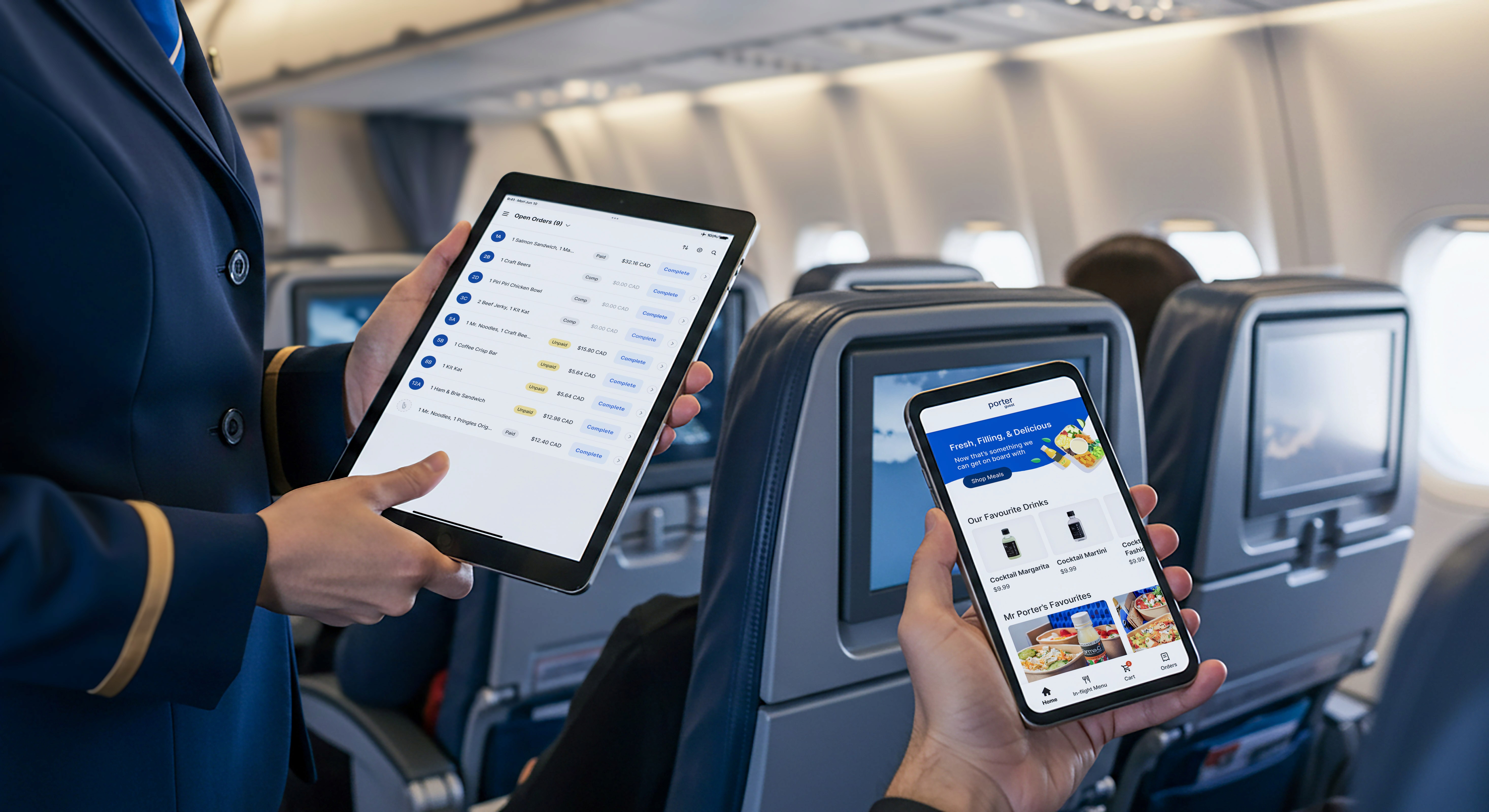
Extend the sales window from gate to landing by connecting passenger orders and crew workflows into one offline-capable ecosystem.
how it ended
Result.
Test flights validated the system with 52% increase in conversion, 22% reduction in spoilage, and $3.5M in projected annual revenue.

the problem
Where was the money going?

Porter's onboard retail program was struggling. Only 7% of passengers made purchases. Spoilage from unsold meals kept climbing.
To uphold its premium promise — ensuring Reserve passengers always got their first-choice meal —Porter consistently overstocked perishable items. But with no refrigeration on board, anything unsold after two hours went in the trash.
Three root issues.
Choice came at a cost.
Flights were overstocked to guarantee variety, but meals expired quickly, driving up waste and cost.
Crew overloaded.
Expected to manage inventory and drive sales, crew were overwhelmed. SOPS were skipped and meals were given away free.
Sales moment passed.
The only buying window was mid-flight when passengers were settled, distracted, or asleep.
the strategy
What if we extended the sales window?
The real challenge was a mixture of fragmented tools, missed moments, and zero visibility into demand. Instead of treating pre-order and onboard sales as separate products, I proposed a unified guest-to-crew ecosystem. One that could guide the retail journey from gate to cruising altitude.
With no time for formal user research, I leaned on what we had:
Patterns from food delivery and POS systems
Crew interviews from previous launches
Past airline pilots and internal sales data
How might we


The Guest App
Seamless ordering – anytime, even offline.


before takeoff
Extending the sales window
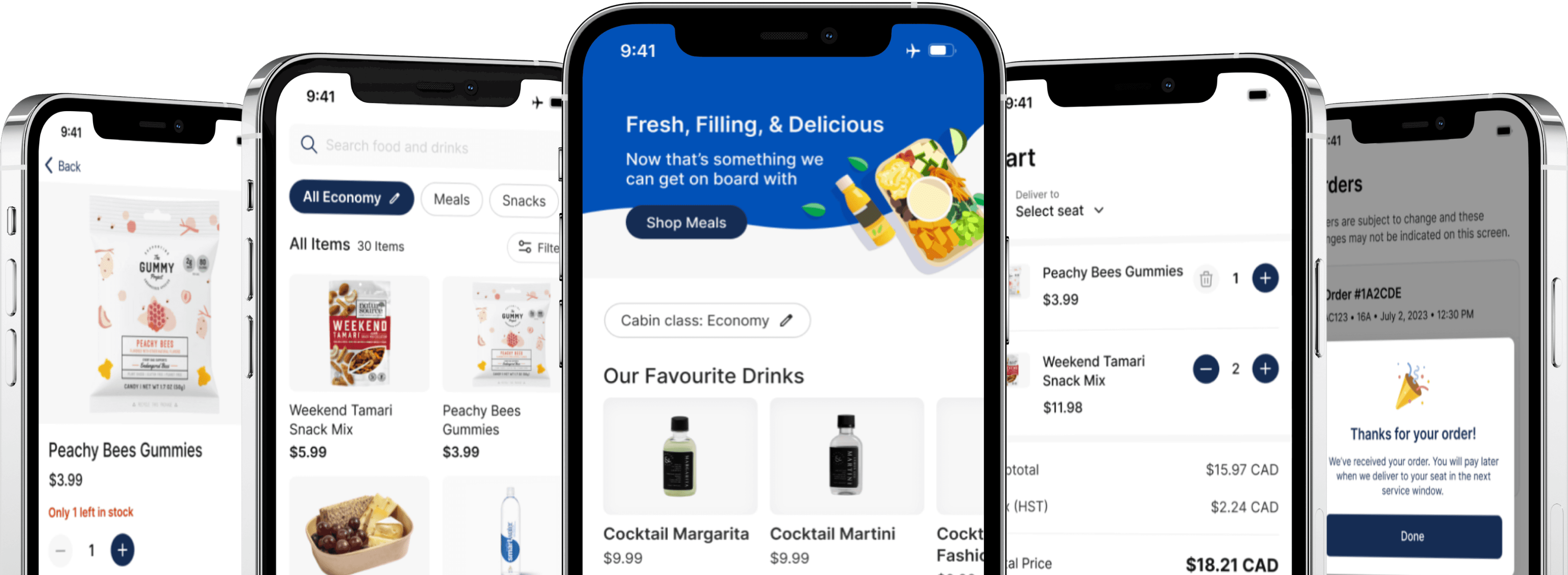
Passengers could now pre-order meals during check-in or boarding when attention was highest and decisions less rushed.
This helped shift revenue earlier, reduce spoilage, and simplify mid-flight service.
Pre-orders (before the onboard service) accounted for 66% of sales in test flights.

during the flight
Removing friction from buying
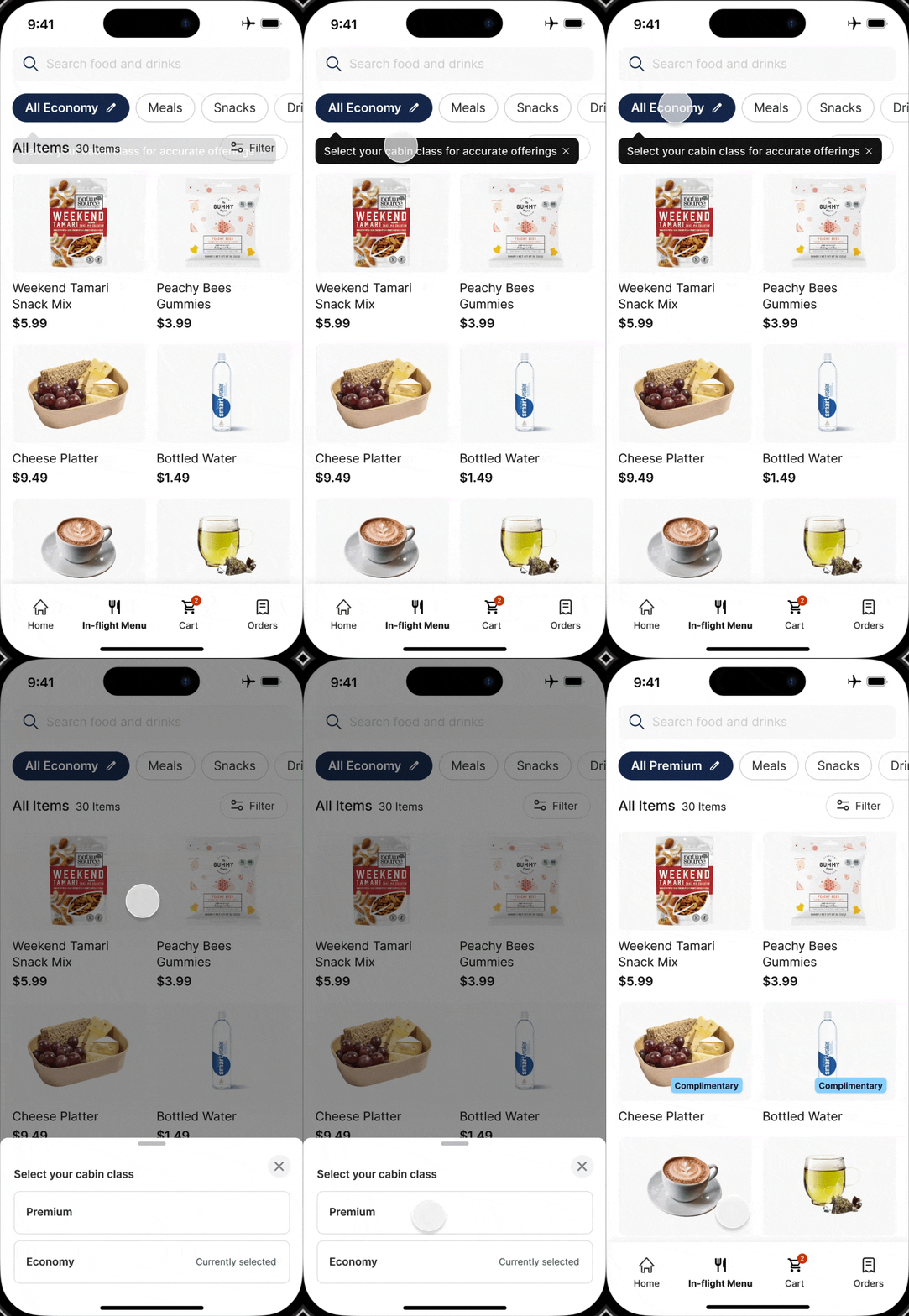
During flight, the app offered seat-specific and cabin-aware menus, available throughout the journey — not just during one rushed cart pass.
Orders were synced to the crew, reducing back-and-forth and manual tracking.
Mid-flight purchases increased by 52% in test routes.
when offline
Building confidence in completion
With offline-first architecture, passengers could browse, order, and even queue payment without connectivity.
Payment methods included pay now, pay later, and wallet options, tailored to airline operational realities.
Flawless order submission even during low-connectivity zones.
The Crew App
Built for the aisle – fast, accurate, and always in sync.
Sell smarter, not slower
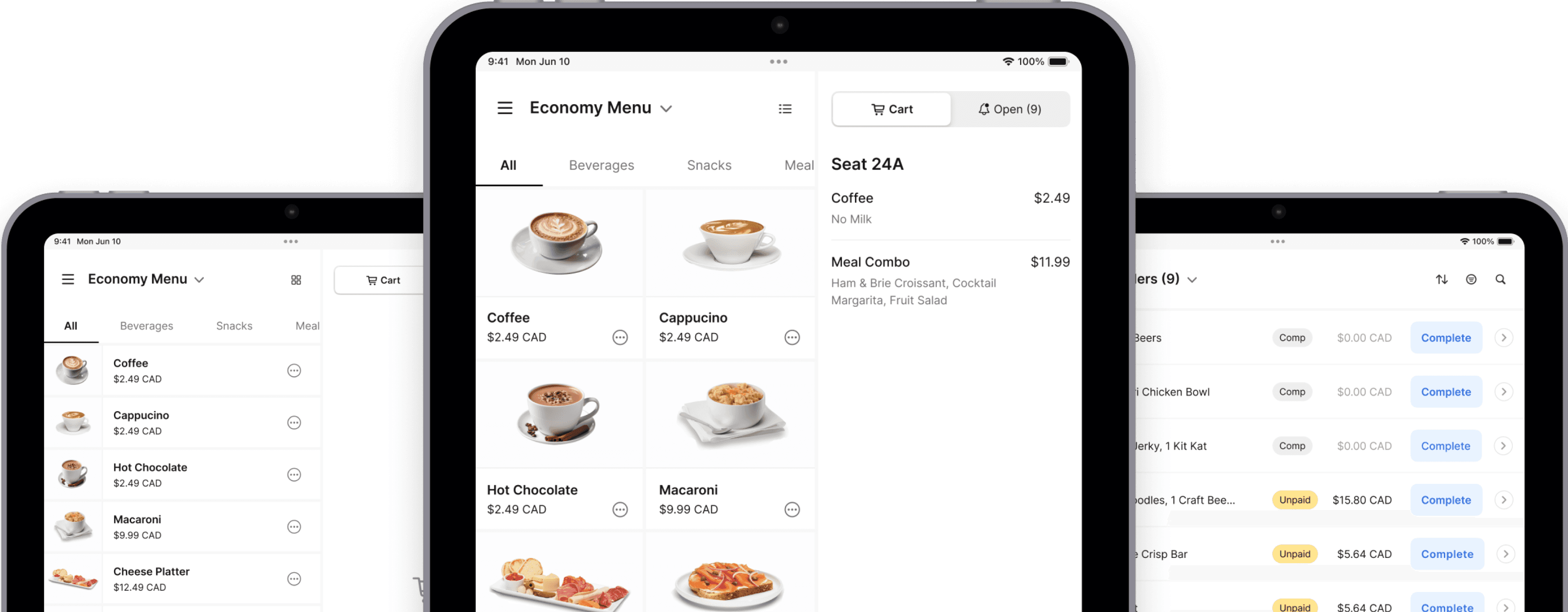
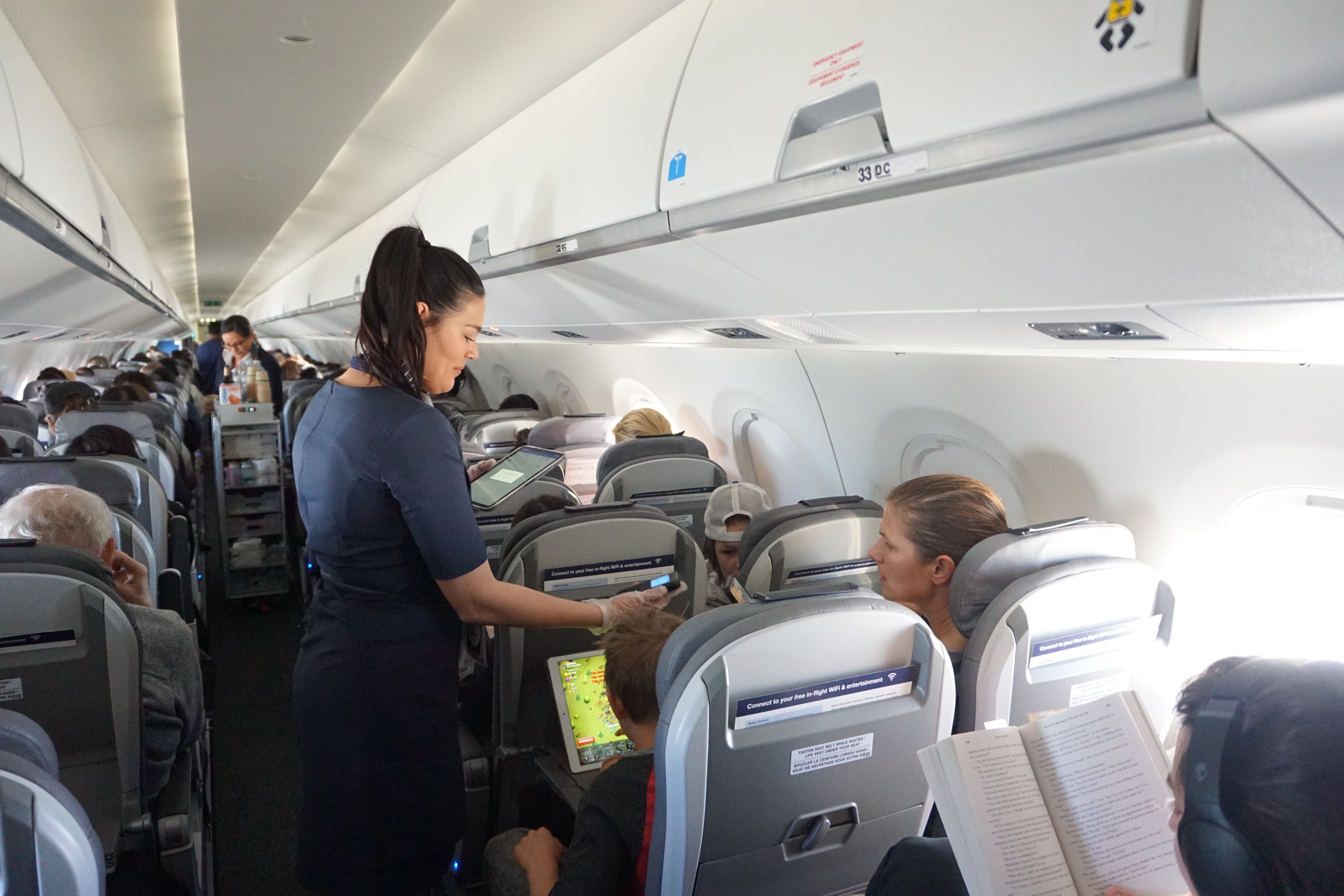
I redesigned the order flow to decouple ordering from delivery, letting crew capture multiple requests in one pass and fulfill them later. This cut aisle time and doubled sales in half the service window during in-flight simulations.
On a live flight, the purser used it seamlessly on her first try and immediately asked when it could go live.

Stay in sync - without internet
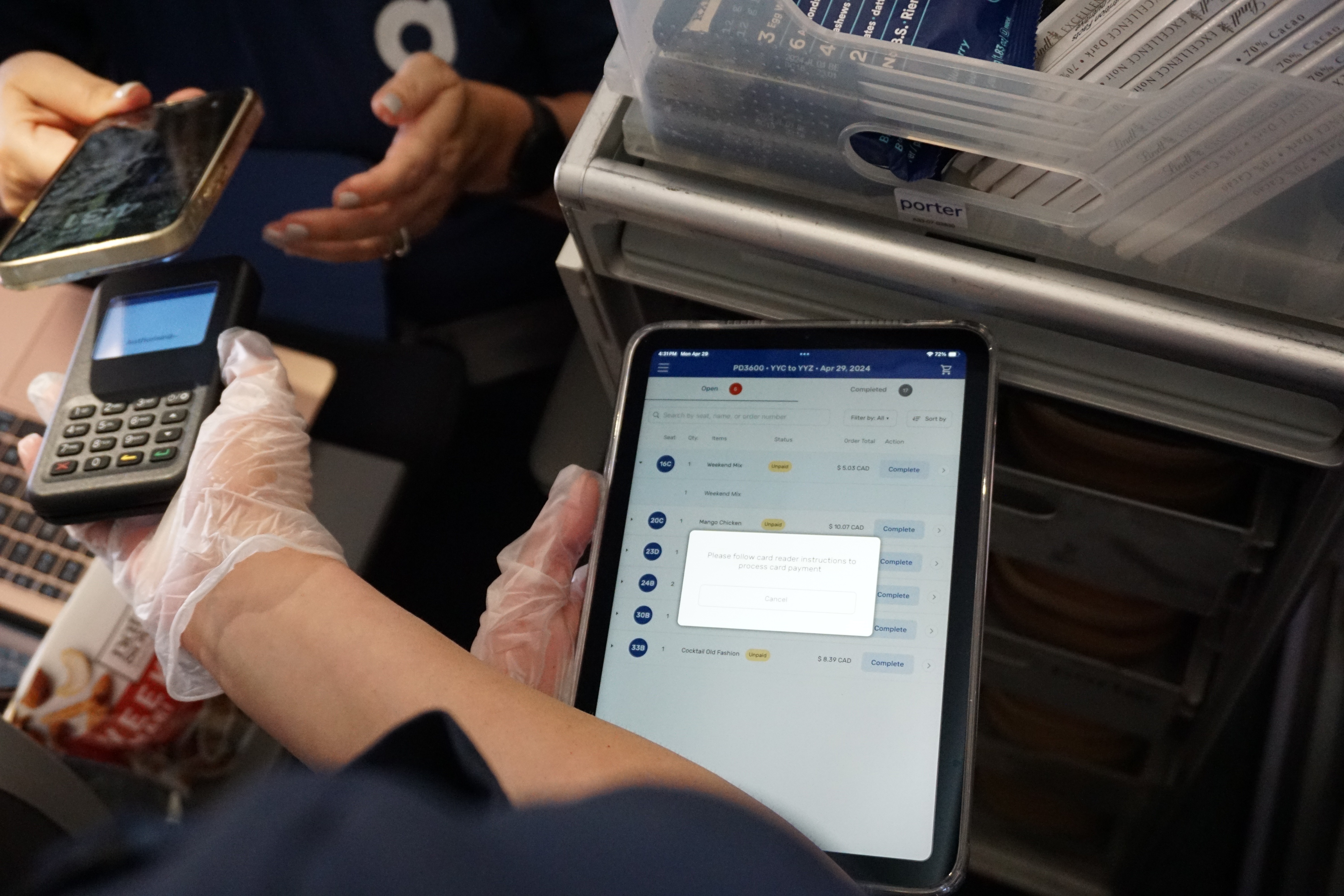
To bypass unstable and expensive data usage onboard, we built a mesh network that synced orders and inventory across all devices in real time. Orders displayed with large, seat-specific labels and auto-sorted front to back to match natural service flow.
Now any crew member could fulfill or edit an order, with changes instantly visible to others. This cut handoffs, reduced back-and-forth communication, and made teamwork smoother. After six live test rounds, crews reported faster service and found the interface intuitive without the need for extra training.

Know what’s available, control what’s not
We gave crew direct control of in-flight inventory, letting them pause items, adjust stock, or hide sold-out products with just a few taps. Menus stayed accurate in real time, preventing guests from ordering items that weren’t available.
The result: fewer complaints, faster service, and more effective upsells by highlighting what could actually be delivered. Crews reported greater confidence managing sales throughout the flight.

Real flights, real results
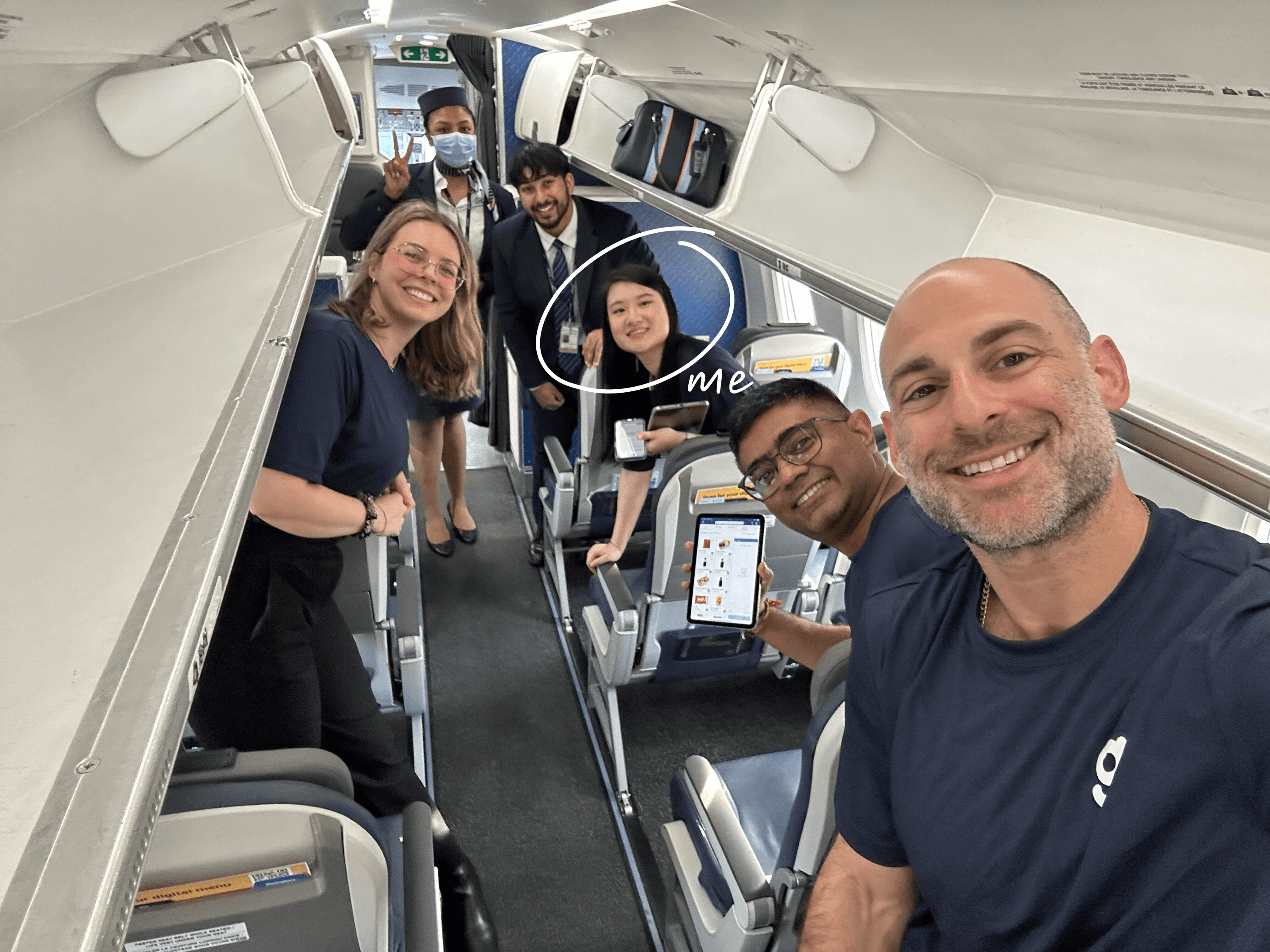
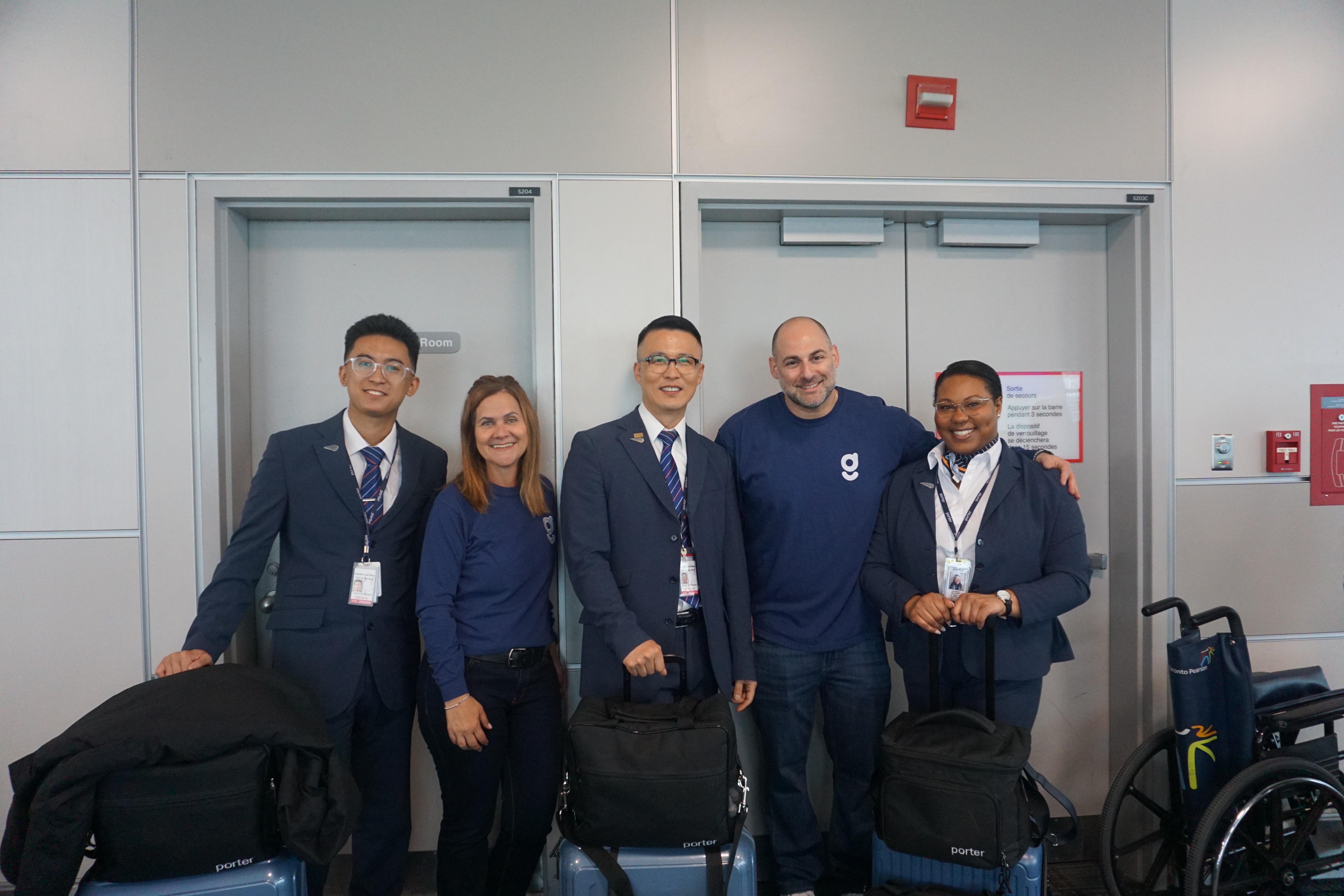
Across six test flights with the airline, we validated the guest-to-crew system in real-world conditions. Through in-flight simulations, live observations, and hands-on crew usage, we measured both business impact and user satisfaction — capturing results from both passenger and crew perspectives.
Conversion
Spoilage
Avg. Order Value
Reflection
This project reminded me that onboard retail isn’t just about an interface — it’s about shaping the environment where crews work and passengers experience service.
My most valuable insights came from observing flight attendants in action, seeing how space, timing, and workflow defined their needs more than any screen could. Those moments reinforced that the best designs don’t come from wireframes, but from being present with users in their world.